Friday, February 21, 2020

What’s the Point of Blogging?

One of my goals hopes this year is to rejuvenate my personal blog.

That raises the question why? What is my motivation, what am I seeking? Immortality via the web? Readers? The internal satisfaction of crafting a thought, an idea, and expressing it well?

Probably all three, although I tell myself the point is to write for myself, as a way to formulate my ideas and then revisit and test them in the future.

Om Malik, a well-known tech blogger who founded GigaOM and now writes for himself at Om, recently wrote about an exchange with writer Craig Mod. Malik writes:

I shared my own resistance to writing in a world that is drowning in words. It can feel like pouring water into the dead sea. Mod’s take surprised me. He said to basically forget about what is in the world, and to focus inward and look at what’s important to one’s self. Let the writing be about your inner thoughts and your interests. Let it be about what drives your soul and your thinking. After all, that is the only value I can bring to the internet, crowded as it is with opinions.

Thanks for the clarity and encouragement.

Saturday, February 15, 2020

The Kindle Chronicles Podcast

Len Edgerly, creator and host of The Kindle Chronicles podcast, invited me to be his guest on this week’s episode. Despite my surprise, as I’m not his typical author or Kindle-related guest, I agreed and am glad I did. We had a wonderful conversation, which you can listen to here:

Len and I first met at a Podcamp Boston conference, where he gave a presentation about podcasting and his workflow with The Kindle Chronicles. Following the conference, I began listening to his weekly episodes and haven’t missed one.

Sunday, January 26, 2020

What's A Citizen To Do?

I'm feeling pretty powerless and dejected by the impeachment trial of President Trump. Through the investigation and impeachment in the House, the Republicans in both House and Senate have shown abject fealty to a president who would be emperor. While the senators are not allowed to speak during the trial, the other voices defending the president seem to be even more amplified and strident.

While I think the president is, without question, guilty of obstruction of Congress, I do see a defense for the charge he abused his presidential power: while the president’s attempts to use Ukraine and hurt the likely Democratic candidate for president were inappropriate, his actions may not justify removal from office. Yet no Republican has acknowledged that his actions were inappropriate. The talking points say the impeachment is a Democratic “coup” to overturn the 2016 election.

Compounding my frustration with the Republican response is knowing the acceptance of presidential power afforded President Trump would not be extended to President Obama, nor to a successor from the Democratic party. To wit, Mitch McConnell refused to grant a hearing for President Obama’s nominee to the Supreme Court, Merrick Garland, and Republicans claimed President Obama’s DACA (Deferred Action for Childhood Arrivals) program was an abuse of presidential power.

Fairness and reciprocity are strong values I hold, and blatant hypocrisy weighs on me physically. What’s a citizen to do?

It now seems the only hope of learning the truth — aside from awaiting the long judgment of historians — is for the Senate to call witnesses who have first-hand observations of the conversations and actions that led to withholding military aid to Ukraine. Four Republican senators are viewed as sufficiently moderate to at least consider voting to call witnesses: Lamar Alexander of Tennessee, Susan Collins of Maine, Lisa Murkowski of Alaska, and Mitt Romney of Utah. So I sent each the following email:

Your Role in the Impeachment Trial of President Trump

Dear Senator,

While you were elected to represent the citizens of your state, your role in the impeachment trial of President Trump is to represent the citizens of the United States in accordance with the Constitution.

As a citizen observing the House of Representatives’ investigation that led to impeachment, I have no doubt that the President is guilty of obstruction of Congress. The evidence that his orders prevented the House from hearing from potential witnesses and reviewing all relevant documents is indisputable.

The evidence supporting the first article, abuse of power, is strong. Based on the President’s history in office, I have little doubt he has abused the powers of his office — and will continue to do so if unchecked. Nonetheless, I understand others believe otherwise. Hearing from the members of his administration who were involved in the Ukrainian discussions and withholding of military funding, such as John Bolton, should confirm this abuse of power or support the President’s claim that he is innocent.

I urge you to vote to call witnesses and gather additional documentation as part of the Senate trial, a logical and timely step to seek the truth about the President’s actions and motivation in withholding military aid to Ukraine.

As a member of the Senate, you stand on the threshold of history. I hope, for the sake of the country, you will choose the Constitution over fealty to the President.

Respectfully,

Gary Lerude

Sunday, January 19, 2020

The Dismal State of Our Political System

Politics has never been a landscape of kind discourse. Policy disagreements quickly decline to ad hominem attacks on an individual holding an opposing view.

President Trump has uniformly used this tactic to demean anyone disagreeing with him, probably thousands of times since declaring his candidacy on June 16, 2015. When he was elected President, I hoped the enormity of the election and dignity of the office would inspire him to shift his behavior. Unfortunately, he remains truculent, not hesitating to dishonor the dignity of anyone caught in his diatribes.


The President of the United States retweeting a disrespectful caricature of the Senate Minority Leader and Speaker of the House was inconceivable until Donald Trump was elected. Now it’s normal.

Although the factionalism of our politics started long before Donald Trump’s ascendency, his standard of behavior has condoned further deterioration of the already rancorous relationship between the political parties. His impeachment provides perhaps the most stunning example, with Republications taking up a full-throated defense of his call to the President of Ukraine, then his recalcitrant attempts to block any investigation by the House of Representatives.

Donald Trump is proving his outrageous campaign claim that he can “stand in the middle of Fifth Avenue and shoot somebody” and not “lose any voters” — apparently not any Republication votes in Congress.

Friday, January 03, 2020

The Merry Christmas Kerfuffle

The 2019 Christmas season is rapidly fading into Christmas past, yet before the discounted greeting cards and wrapping paper totally disappear from the stores, I want to reflect on one of President Trump’s campaign promises, to make saying “Merry Christmas” politically correct once again.

That’s one campaign promise where he’s claimed success, at least as far as uttering what he wants — which he certainly does, whether at a campaign rally or via his Twitter feed.

I’m speculating that this Merry Christmas kerfuffle is a reflexive response by those who feel they are losing their heritage or culture. That puzzles me, as I don’t see the loss.

My practice is to say “Merry Christmas” to those who celebrate Christmas, “Happy Hanukkah” to those who celebrate Hanukkah, “Happy Diwali” to those who celebrate Diwali, and “Happy Holidays” when I’m not sure what holiday, if any, is meaningful to whoever I’m addressing. In a group with strangers, my default is “Happy Holidays.”

If I managed a store catering to the community or a business with diverse employees, I’d go with “Happy Holidays” to be as inclusive as possible.

My intent is not to devalue or offend Christians. Rather, the choice of words reflects my intent to be kind and avoid offending someone who doesn’t find meaning in the Christian view of Christmas. It doesn’t matter that the majority of Americans are Christian, assuming that is really true, or that the first European immigrants who arrived in America held Judeo-Christian beliefs. Making space for another person’s beliefs doesn’t change what I believe nor threaten my beliefs.

The choice of greeting can be a sign of gracious hospitality acknowledging other beliefs and the right to hold them. Or, it can be a sign that the other person is not one of us — our myopic sense of a homogenized America — and not welcome.

I hope we can see beyond any feelings of loss to honor our neighbors, coworkers, and the strangers we meet. Namaste.

Monday, December 30, 2019

A World We Rarely See

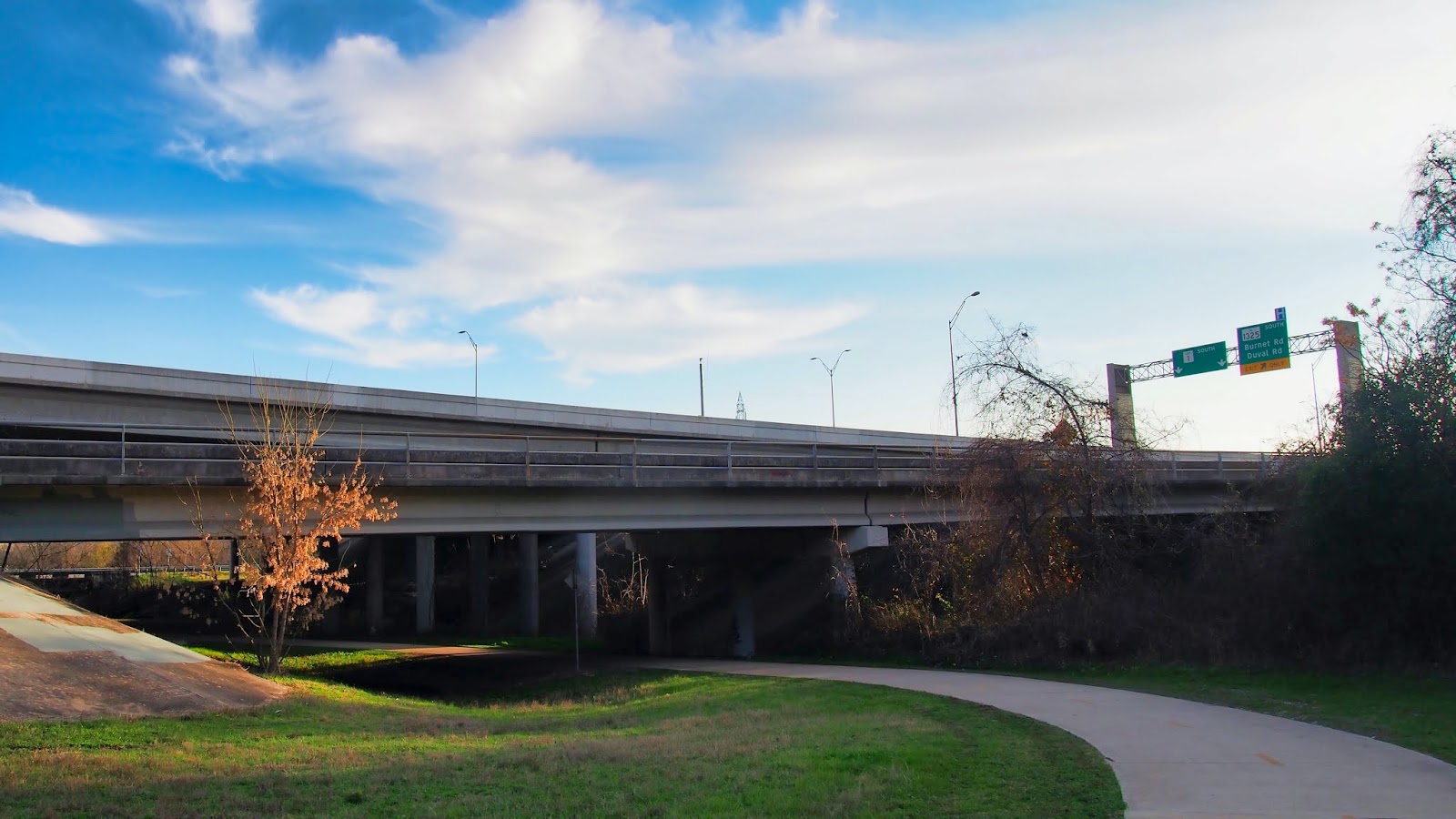
The freeway carries thousands of cars each day, north to south, south to north, the drivers unaware of the natural world off the pavement — a world, ironically, made accessible by another intrusion of civilization, a cement path.

My daughter’s apartment in Austin borders the Balcones District Park, which connects to the Northern Walnut Creek Trail on the other side of the MoPac expressway.

Walking the trail shortly before sunset, we encountered four deer crossing the concrete path from the northern woods to the trees on the south side, likely heading for water from the creek. They didn’t seem too concerned by the scattered people on the trail, an ironic benefit of being engulfed by a city where shooting deer is illegal.

Their world or ours?

These two worlds coexist, parallel yet largely separate, providing a peaceful spot in the heart of the city, away from the rush of life.

Saturday, December 14, 2019

Fear of Huawei Creating an International Digital Divide

U.S. fears that Huawei is an existential threat to the security of western democracies, a Trojan horse for the authoritarian Chinese government, have precipitated a series of events building a digital divide, a divide separating the communications networks using Huawei equipment from those where it is shunned. The implication for data crossing both networks en route from user to cloud: you can’t get there from here. To be carried by Huawei (or ZTE) risks being copied and sent to Beijing.

We’re seeing the impact of this fear as the political rhetoric escalates:

In May, the U.S. imposed an expansive ban on suppliers exporting products to Huawei. Apparently, that ban has not sufficiently crippled the company. The Trump administration is reported to be considering additional export restrictions to prevent products manufactured outside the U.S. with U.S. technology from being supplied.

According to CNBC,

Under current regulations, key foreign supply chains remain beyond the reach of U.S. authorities, prompting inter-agency discussions within the administration of President Donald Trump about possible changes to two key rules that could expand U.S. authority to block more foreign shipments to the company, giving more teeth to Huawei’s blacklisting.

The U.S. continues to pressure other countries to ban Huawei equipment, particularly for 5G networks. Asking countries to choose sides is unlikely to eliminate Huawei and ZTE from the global stage, considering both offer very competitive pricing compared to Ericsson and Nokia.

Responding to its own existential threat, Huawei has accelerated development of internal technology, also seeking suppliers outside the U.S. Japan, Taiwan and Europe are the beneficiaries. Quoting China Daily, Mobile World Live reported Huawei’s imports from Japan are expected to reach $10.1 billion this year (2019) — a 50 percent year-over-year increase — and will come close to the reported $11 billion Huawei purchased from U.S. suppliers in 2018.

The first evidence of Huawei’s success is the new Mate 30 smartphone, which uses no U.S. components according to The Wall Street Journal. Huawei is also developing a mobile operating system as an alternative to Android, which it has named HarmonyOS or Hongmeng in China. As the world’s second largest mobile phone manufacturer, Huawei has the scale to develop its own operating system and force market adoption, particularly in China, home to the largest number of mobile phone users.

Responding to U.S. sanctions and advocacy, Huawei’s founder, Ren Zhengfei, has granted numerous media interviews to argue his company is not a security threat.

Beyond reassuring words, Ren said he will move Huawei’s North American research center from the U.S. to Canada, according to Canada’s The Globe and Mail.

Not as genteel as the company’s founder, Huawei’s lawyers are suing the FCC, claiming the agency’s action to block U.S. telecommunications operators from buying Huawei (or ZTE) equipment is illegal.

The Chinese government has been surprisingly quiet during this maelstrom, although it has defended its most successful telecommunications equipment manufacturer, most vocal protesting the arrest of Ren’s daughter and Huawei CFO, Meng Wanzhou. Canada arrested Meng at the request of the U.S., which is seeking her extradition to stand trial for illegal exports by Huawei.

Now China seems to be adopting similar tactics to the U.S. The Financial Times reports the Chinese government has ordered all government offices to replace foreign computer equipment and software within three years, a retaliatory blow that will hit U.S. suppliers Dell, HP and Microsoft.

These rancorous events suggest the growing digital divide between the U.S. and China won’t end well. Although Huawei is the lightning rod for U.S. concerns about national security, it’s simply a proxy for Chinese policy. Any long-term resolution will require a broad cybersecurity agreement between the U.S. and China, one based on trust and verification, borrowing a phrase from the nuclear arms agreements of the Cold War.

If there’s an engineering solution to this dilemma, it’s not obvious. Perhaps that should be the focus of 3GPP in 2020. The benefits of 5G will be hard to realize if our networks become islands disconnected by fear.

Note: This was first published as a post on my Microwave Journal blog, on December 13, 2019.

Saturday, September 07, 2019

Unintended Consequences

Ironically, a company’s loyalty programs, presumably intended to promote customer loyalty, may cause the opposite.

Of the numerous hotels I’ve stayed in during my career, I’ve had a preference for the Hilton brand. Not sure why, but if I had a choice and the rate was reasonable, I’d generally pick Hilton. Marriott was second on my list, judging by the points I accumulated with both chains.

Five years ago, I switched jobs. In my current role, I don’t travel as often, and I work with a group of loyal Marriott customers. If I’m traveling with any of them, I usually end up in a Marriott brand hotel room.

Several months ago, I received an email from Hilton saying if I didn’t stay at one of their brands within a few months, I would lose my remaining points. Was that a marketing policy to encourage room nights or an accounting policy to reduce liabilities on the balance sheet? Nonetheless, I didn’t have a business or personal reason to book myself into a Hilton, other than doing so to save my points.

I’ve done the airline mileage run a few times to maintain status, but that was years ago. I’m past the age where airline or hotel status means that much to me.

So I let the Hilton points expire.

I still have a healthy balance of Marriott points and every reason to maintain my  presence at Marriott, as those points will yield free room nights one of these days.

With zero points at Hilton, there’s no reason for me to be loyal — no more or less than any chain other than Marriott.

Hilton saved a few points and lost a long-time customer. I wonder if that’s what they wanted.

Tuesday, June 11, 2013

Leaking government secrets: patriotic?

This past week we learned that a 29-year-old systems administrator working for the NSA -- actually working for Booz Allen, under contract with the NSA -- leaked classified information about two government programs to access telephone records and Internet traffic. (More about this story here.) Both are part of the government's efforts to combat terrorism and, arguably, make us all safer.

The counter argument is that the government is accessing massive amounts of personal data that should be private, violating the Constitution's protection against unreasonable search and seizure. From this perspective, the leaker and the two newspapers that published the material (The Guardian and The Washington Post) serve the public interest.

My brother Warren, a journalist, has been "debating" the issue with a few of his colleagues, copying me on the back and forth. The discussion stimulated me sufficiently to chime in. To wit,

I'm old enough to remember Daniel Ellsberg and the Pentagon Papers, yet too young to recall the details to be able to discern the parallels and differences with this incident.

Nonetheless, from my vantage point on the far side of the elephant, I think the disclosure is beneficial for (hopefully) starting a public debate on the rights of the government to sweep our personal data. The Supreme Court borrowed from Donald Rumsfeld when it declared that you can't sue for what you don't know. Now we know what we didn't know, and I see where the ACLU has already filed suit.

Despite the administration's declarations of transparency, one cannot disclose a secret without losing one's security clearance and likely going to jail. So even before Congress, the system requires one to lie, rather than tell the truth. The only way for the truth to out is through leaks. Ironically, while the public and the press benefit under our First Amendment rights, the leaker will likely go to jail.

Last point: I don't agree that this disclosure will compromise national security. I have long assumed that we have the capability, technologically, to read and listen to most any conversation that interests the government. For a terrorist to be surprised by this disclosure suggests a high degree of naivete; just look at the precautions taken by Osama Bin Laden to avoid creating a digital trail.

Sorry, one more last ironic point: while we worry about the Chinese companies like Huawei and ZTE providing equipment for our telecommunications networks, the threat is really the "lowly" IT guy.

Monday, April 15, 2013

Paying it backward


Zoe Goodell, working the drive-through window at the Exit 6
Starbucks in Nashua.
Feeling the holiday spirit, my daughter Andrea pulls into the drive-through lane at Starbucks, planning to pay for the person behind her. She’s surprised to find that someone ahead of her has the same idea, so her skinny vanilla latte is gratis.

A couple weeks later, after the holidays, she receives the same generosity. However with no one behind her, she can’t reciprocate.

Paying it forward — actually backward through the drive-through lane — is a common event, according to Judy Johnson, manager of the Starbucks at Exit 6 in Nashua. During December, these random acts of kindness happen every day. And they continue throughout the year, just not as often.

“Sometimes it only lasts a couple. Sometimes it goes on and on and on,” Judy says, recalling that the longest sequence at the Exit 6 store was more than 20 cars. She attributes the motivation to people just wanting “to do something nice for someone, a random stranger.”

Those who haven’t experienced someone buying their coffee are surprised. A typical reaction, Judy says, is “Do I know that person?”

The baristas like to have fun with the experience, sometimes adding a hint of intrigue to the generosity — telling a woman that the guy in the car ahead bought her coffee, then watching for the reaction.

Zoe Goodell, a barista at the Exit 6 Starbucks, works the drive-though and sees this parade of kindness firsthand. “I think it’s really great when people pay for each other.”

When the person at the window is buying a $2 coffee and the car behind has a $20 order? Usually the sequence stops. But the generosity invariably restarts, Judy says, when someone pulls up to the window and offers to pay for the next order, sometimes saying they want to repay a prior act of kindness.

While most of the action occurs in the drive-through, patrons inside the store — Judy calls it “the cafe” — will occasionally buy coffee for each other. She says that doesn’t happen as often, nor last as long.

Why the difference between the drive-through and the cafe? Maybe it’s that the drive-through is “quick and easy,” Judy says, or perhaps it’s the anonymity. Aren’t we taught that giving anonymously is a high virtue? Reflecting that, perhaps, sometimes a cafe customer will purchase a gift card and leave it with the store, to buy as many orders as it takes to deplete the value.

Judy invites me to personally witness this display of human nature. So I arrive at the Exit 6 Starbucks shortly before 8:00 on a Monday morning.

I wonder if this is the best day for such an experiment, two days after winter storm Nemo traverses New England, closing 450 of the 500 Starbucks in the region. Will customers be in any mood to be generous, after this disruption in their lives and on a Monday morning? Perhaps sensing that people may be on edge, Starbucks is offering patrons a free tall coffee until 11 am.

Judy has me don the signature green apron and positions me near the window, where I can observe and listen to the conversations.

Zoe and Jen Donnelly are working the drive-through, performing a graceful ballet of constant motion. Both wear headsets. Zoe talks, Jen mainly listens and responds to the orders. As customers speak into the intercom in the drive-through lane, fingers fly over the touch screen and the two young women silently prepare the drinks, at times asking one of the other baristas to bring food from the refrigerated case in front, sometimes going for it themselves. As each car pulls up, Zoe opens the window with a friendly greeting, accepts payment, and carefully hands the order to the driver.

Judy checks to ensure we have a line of cars, scans the various orders on Starbucks’ version of an air-traffic-control radar, and selects one to start the pay-it-backward game. I offer to pay for the order, but she shakes her head.

When the car pulls to the window and holds out a $5 bill, Zoe cheerfully informs the driver that the driver in front has paid for her order. Surprised and pleased, she hands the $5 bill to Zoe as a tip, not offering to pay for the next car.

“That’s unusual,” Zoe says.

Judy scans the orders and starts the process again. When Zoe tells the driver the person in front already paid, the response is a blend of curiosity and pleasure.

“Oh they did?”

But no offer to reciprocate.

The snow is beginning to fall. Judy heads for her desk in the back. Nemo disrupted their weekend, and she needs to catch up. I pull out my Starbucks card. Zoe picks another car, and we try again.

The next driver, hearing the news, pauses. “What’s the guy behind me getting?”

Zoe responds with I can’t recall what. But the total is only $2.45. He pays it backward.
The next car, informed that the driver in front paid for the order, looks forward. “Who was he, or she?”

With no car behind, there’s no way to pay it backward. “I’ll pass it on somewhere,” he says and drives off.

A driver orders a tall coffee. Zoe informs her that it’s free because of the snowstorm. That is unexpected and causes a long pause. “Oh. Okay. Thank you.”

We start again. An older woman arrives at the window. She is obviously surprised, maybe even stunned. “This is the first time someone ever paid for my coffee.”

One man, told the order behind is $3 more than his, breaks the chain. Another, whose order is $2.67 pays $8.07 for the car behind with no hesitation.

We can’t seem to get momentum, and I’m losing track of the numbers and the details of each transaction. My pen is almost out of ink.

“This is the last” I say to Zoe, again handing her my Starbucks card. Amazingly, we get a run of six cars, each driver showing surprise and pleasure. Reflexively, they immediately look to see who is in the car in front, seeking recognition. The lack of connection makes a connection.

The seventh car pulls to the window. Zoe smiles and says the person in front paid for her order. She looks forward toward the car pulling away, says “oh,” smiles — and doesn’t offer to pay it backward.

As I leave the store and walk to my car through the falling snow, I realize that the real benefit of my $11.50 investment in this experiment is not the total number of cars without a break. It’s each individual’s experience of receiving a small act of kindness, like the woman who exclaimed that no one had ever bought her coffee.

Perhaps even more than the surprised patrons, the baristas enjoy the whole experience and the part they play. Their faces light up talking about it. “I love when that happens,” says Erin Peña, another barista at the Exit 6 store.

As Judy explains, “We play along. It creates a camaraderie in the store.”

Still trying to understand the psychology, I ask my daughter her motivation for buying someone’s coffee. She emails me that “the first time was pure holiday spirit. I was feeling cheerful as Christmas was approaching and really wanted to put a smile on someone's face. However, after that first experience, I believe that I was even more compelled to do it, secretly hoping that if the ‘game’ had not been being played before I drove up, I could at least start it. In both scenarios, I wanted to make someone happy.”

The pay-it-forward phenomenon is not unique to the Exit 6 Starbucks. Erin, who worked at the Leominster, Massachusetts, store before transferring to Nashua, says it happens in the drive-through there. Searching YouTube reveals several TV news reports about the trend, including the story of one Starbucks in Greensburg, Pennsylvania, where the pay-it-forward sequence lasted over an hour and totaled 100 cars.

Across the nation, one person at a time, spending a few dollars for a random act of kindness.

Note: This is the second of two articles I wrote for the news writing class I took at the Nackey S. Loeb School of Communications this winter. Meg Heckman, formerly a reporter with the Concord Monitor and now pursuing her master's degree at Northeastern, taught the class.

Flatley adds apartments, retail to technology park

Neighbors gather to hear construction update and plans


Note: This is one of two articles I wrote for a News Writing class taught by Meg Heckman at the Nackey S. Loeb School of Communications. It was a great class, as Meg shared her tested experience as a reporter, conveyed with an enthusiasm for journalism. The Loeb school makes such learning very accessible to the community, offering a range of classes on journalism and social media, most free.

January 26, 2013 -- Approximately fifteen people from the Lancashire Heights neighborhood in south Nashua turned out Saturday afternoon to hear the progress and plans for the development of the Nashua Technology Park, now renamed Gateway Hills. Dick Cane, Director of Planning and Development for the John J. Flatley company, briefed the group on the development project, which is adding apartments and a strip shopping center to the current office park.

The Flately company owns 400 acres in south Nashua, located to the west of the Everett Turnpike and north of Spit Brook Road.

“No one knows we’re here,” said Cane, stating that the office buildings are largely hidden from drivers on the highway and Spit Brook Road. That made it challenging to lease the three buildings Flatley purchased from HP in 2007. Despite the soft economy and the lack of visibility, the company has leased over 500,000 square feet, and the buildings are now over 90% occupied. Flatley is planning construction of another 240,000 square foot R&D building, perhaps as early as this year. The companies in the existing buildings are well-known technology firms: Amphenol, Aspentech, Benchmark Electronics, Dell, and Skillsoft.

Apartment construction

What largely drew the neighbors to the meeting are the new apartments being constructed parallel to the homes on Chaucer Road in Lancashire Heights. Called Tara Heights, the first phase consists of five buildings that will house 180 one- and two-bedroom apartments and a clubhouse. Rents will range from $1,150 per month for a one-bedroom apartment to $1,600 for a two-bedroom corner unit. Cane said tenants will begin moving in during May, with the last building occupied in September.

The second phase of apartment construction will add 140 units and extend the complex eastward towards the Everett Turnpike.

The apartments are separated from the neighborhood by a 300 foot buffer, and no streets connect the site and the neighborhood. A gravel emergency road, required by the Nashua Fire Department, will provide emergency access to the complex from Shakespeare Road in the neighborhood. However, the emergency road will be blocked by a chain to prevent traffic.

Cain said that construction required “a lot more blasting for utilities than we assumed” due to the amount of granite in the area. John Cepaitis, who lives north of the apartments, at 16 Shakespeare Road, told Cane that he and his wife have found cracks in their foundation and inside along the fireplace. Although the blasting firm took photographs of the homes adjacent to the apartment site, to be able to determine whether the blasting caused damage, Cepaitis’ home was not included in the survey, since it does not face the apartments. According to Cepaitis, although farther away, his house sits on a granite ledge, possibly making it susceptible to damage from the blasting.

Strip retail

In addition to the apartments, construction of a strip retail center along Spit Brook road is well underway, following clearing of trees and leveling of the land last summer. The five-building site will include medical and dental offices, a coffee shop with drive-through, dry cleaner, hairdresser, what Cane called a “small dining” establishment, and possibly a bank or other financial institution. Only the medical and dental offices have been leased, according to Cane, and the coffee shop has provided a letter of intent.

Cane said the design of the retail center is upscale, with clock-tower architecture and the use of earth tones. He said the Flatley Company wants to create a good first impression of the Gateway Hills development, and the retail site is the most visible.

The company’s vision is that the medical offices and retail businesses will serve the people living in the apartments, many of them working for the companies in the technology park.

Outlook

Several proposed road extensions within the development need to be approved by the Planning Board or Zoning Board of Adjustment. According to Cane, these will be presented during the February and March board meetings.

Looking longer term, Cane believes only the southern 260 of the 400 acres owned by Flatley will be developed over the next three to five years. He doesn’t see the northern section being developed sooner unless a company needs space that can’t be accommodated by the existing site.

Within the 260 acres, he said that Flatley may construct a hotel to serve the companies in the area and provide an alternative to the existing, castle-looking Radisson, which Flatley doesn’t own.

Sunday, November 11, 2012

Lame-Duck Congress

Can this lame-duck Congress redeem itself and deal with the looming fiscal cliff?

The roles haven't changed: the Republicans still control the House, the Democrats the Senate, and President Obama was reelected to a second term. But perhaps, hopefully, the election sent a message to our elected officials that it's time to reach across the aisle and find bipartisan solutions to the nation's financial challenges.

In that spirit, today I sent the following email to my New Hampshire delegation, Speaker Boehner, Senator McConnell, and Senator Reid:
As you return to Congress following the 2012 election, I urge you to take the necessary steps to avoid the fiscal cliff, reduce the debt, and ensure the long-term viability of Social Security and Medicare. 
To accomplish this challenge, I believe spending must be reduced – defense included – and tax revenue increased. The latter should include increased tax rates, on the most financially fortunate Americans, and reductions in tax deductions.
No sacred cows or rigid ideologies. Please leave your political affiliation at the door and approach this vital work as an honest broker.

Saturday, November 10, 2012

A recap of the 2012 election

Before the echoes of the convention speeches, the attack ads, and the chattering television pundits fade to silence, I want to reflect on the election.

I voted to reelect President Barack Obama, overturn the Republican majorities in Congress and the New Hampshire House and Senate, and elect a Democrat to replace Governor John Lynch. While my goals weren't fully realized – the Republicans remain the majority in the U.S. House and New Hampshire Senate – I am pleased with the outcome and hope we will have a more effective government than the past two years.

This election is notable because I voted a straight party ticket for the first time in my life, although I still label myself an Independent. I have always weighed each race and voted for the candidate I felt would best fill the position. Until this election, that philosophy yielded a mix of Democrats and Republicans. Political parties have seemed a necessary evil and straight party voting has been anathema, so this election is an indication of a sea change in my view of the political landscape. So, before I forget, what drove my votes?

1. The Economy

The thesis of Mitt Romney's campaign argued that Barack Obama was responsible and accountable for the poor performance of the economic recovery, that the policies pursued by the Obama administration were ineffective – even hindered the recovery.

The steps taken by the Bush and Obama administrations at the beginning of the Great Recession, in the fall of 2008 and early 2009, decelerated the downward spiral and positioned the economy to recover. Government policies notwithstanding, I believe the slope of the recovery has been equally influenced by forces around the globe: the fiscal crisis in Greece, the malaise in Europe, the depressed housing market in the U.S., the caution of the banks as they seek to restore their balance sheets, and the bankruptcy and recovery of the auto industry.

I have no way to know whether a "pure" Republican response to the crisis would have yielded better results. However, I suspect that had GM and Chrysler not undergone a government-imposed bankruptcy and restructuring, the economies of Michigan and Ohio would be in far worse shape today. I don't believe the free market, as it was functioning in 2009, would have provided the capital, had the power to restructure the debt, nor moved as quickly to save the companies.

The growing U.S. debt is a concern and certainly must be addressed. Yet my college economics class and listening to various economists over the years leave me with enough belief in Keynesian theories to conclude that reducing debt by cutting government expenditures can stall an economic recovery. I think Britain and Greece are examples. Blaming the Obama administration for growing the debt during the past four years seems unfair. I suspect John McCain would be just as guilty, had he won the 2008 election.

Considering the state of the economy, I saw no basis to criticize President Obama's performance and vote for Mitt Romney.

2. Healthcare

Next to the economy, the Republican's second talking point was the repeal of Obamacare. Their original argument to "repeal and replace" simply changed to "repeal," with no discussion or, in my opinion, intent to replace.

The Affordable Care Act certainly has flaws, and the process that passed it exemplified the metaphor of making sausage. The very silver lining to that cloud, however, is we now have a framework for providing health care insurance to most Americans, with a balance to the historically punitive power of the insurance companies in the "free" market.

For very personal reasons, I'm not willing to start over; I have no faith that under a Romney administration we would see reasonable access for all Americans – even within my lifetime. That would be a moral failing, as the U.S. is the only developed country that doesn't provide comprehensive access to health care. Seeing the statistics on cost and medical outcomes, we can't even argue we have the best system for our society (meaning not just fortunate individuals).

President Obama overwhelmingly won my vote on this issue.

3. Social Values

I find it odd that while Republicans decry the role of government in our lives, they feel justified in defining the social values that everyone should live by.

Same-sex marriage most resonates with me, as I see it as a human rights issue, comparable to the civil rights struggles that played out on the TV screen of my youth. The Republican majority in the New Hampshire House unsuccessfully attempted to overturn same-sex marriage this year, arguing that the prior legislature had no right to make it legal. Of course, that was based on the religious belief that same-sex marriage is "wrong," that marriage should only recognize a relationship between a woman and a man. The 2012 Republican platform also states this position.

That's not my religious belief, and I don't want that imposed on the same-sex couples I know and respect and love. I don't want that sanctified loving relationship, nor the legal protections it affords, denied to any gay or lesbian couple.

Other values were debated during the campaign, including abortion, access to contraceptives, funding for Planned Parenthood. On all of them, I sided with President Obama and the Democratic candidates running for Congress and offices in New Hampshire.

4. Candidate Mitt Romney

No doubt Mitt Romney is a smart and decent man, despite portrayals of him being an unfeeling oligarch. I do respect his business experience and success, and the pragmatism that requires. That's not what concerned me.

Rather, I couldn't determine his political leanings from the course of his campaign. During the primaries, he tacked to the most conservative side of the party, calling himself a "severely conservative Republican governor" during one of the debates. Once he had the nomination, though, he tacked back toward the center, sounding like the most moderate person in the first debate with President Obama.

Who was the real Mitt Romney and how would he lead the nation? I wasn't willing to take a chance voting for him, with a hope that he would govern as a moderate. On this point, I voted against Mitt Romney.

5. Bipartisanship and Compromise

Washington has been in gridlock the past two years, since the Republicans assumed control of the House following the 2010 election. There's no better example of this than the bickering over the debt and raising the debt ceiling, the failed Congressional debt commission, and the resulting fiscal cliff that looms at the end of the year.

I am critical of President Obama for not adopting the work of the Simpson-Bowles Commission as a baseline plan to address the debt. Politically, I recognize that had he embraced their dramatic approach, he would have created a target for the Republicans, whose mantra is spending cuts with no increase in taxes.

Despite the possible missed opportunity, the President and House Speaker John Boehner almost crafted a deal, until it was scuttled by the conservative members of the House. That led to the failed Congressional debt commission and now the ticking time bomb of sequestration, which I've heard the New Hampshire Republican delegation repeatedly decry. Ironically, sequestration is linked to their own unwillingness to compromise on increasing tax revenue – which would violate their pledge to Grover Norquist.

While I'm not so naive that I would argue the behavior of the Democrats in Congress is pure, I find greater fault with the Republicans. Senate Minority Leader Mitch McConnell's admonition rings loudly in my ears:
The single most important thing we want to achieve is for President Obama to be a one-term president.
I think the Republicans in the House and Senate have worked to that end, employing the strategy articulated as just say no, and betting they would win the Presidency.

President Obama won my vote by the Republican Congress losing it. However, I struggled a bit voting against Charlie Bass. I respect his independence and willingness to vote against his party on various issues. He's a model for all of our elected representatives. Unfortunately, he's only one voice among many Republicans who don't seem to share his philosophy. So I voted for Ann McLane Kuster.

The Outlook

I'm very encouraged by the outcome of the election in New Hampshire: the House has flipped from Republican to Democratic majority and Democrat Maggie Hassan will replace John Lynch. I think we will have a more balanced agenda.

During the President's second term, we'll see the implementation of Obamacare and can begin to address the inflating cost of health care. I'm not worried about backtracking on social issues. I hope, fervently hope, that we'll see the bipartisan statesmanship to truly address the debt and long-term viability of Social Security and Medicare.

With President Obama reelected, Mitch McConnell's goal is no longer relevant, making me hopeful that Congress can break the partisan gridlock, despite the same majorities in the House and Senate. The most pressing issue is dealing with the fiscal cliff. I urge the lame-duck Congress to address this and not kick the proverbial can to the next Congress.

These next six weeks should be very interesting.

Sunday, August 05, 2012

Romney compliments Israeli health care

On his recent international trip to demonstrate his foreign policy credentials, Mitt Romney, the assumed Republican presidential nominee, complimented Israel's health care system — at least the cost and outcome. As reported by the Washington Post's Wonkblog, Governor Romney said
Our health care costs are completely out of control. Do you realize what health care spending is as a percentage of the GDP in Israel? 8 percent. You spend 8 percent of GDP on health care. And you’re a pretty healthy nation. We spend 18 percent of our GDP on health care. 10 percentage points more. That gap, that 10 percent cost, let me compare that with the size of our military. Our military budget is 4 percent. Our gap with Israel is 10 points of GDP. We have to find ways, not just to provide health care to more people, but to find ways to finally manage our health care costs.
Ironically, the Israeli health care system is funded through taxes, imposes a mandate for everyone to participate (through taxes), provides access to all citizens (regardless of employment or income), and controls health care costs with government involvement in physician contracts and capping hospital costs.

Measured by two outcomes — child mortality and life expectancy — Israelis do better than Americans.

Given all the bashing of Obamacare, particularly following the Supreme Court ruling, it's ironic that Mitt Romney would choose to highlight Israeli healthcare. Their results surely reflect the construction of their system.

During the development of what became the Affordable Care Act, the Christian Broadcasting Network produced this profile of the Israeli health care system. It provides a good overview of the key attributes and notes pros and cons compared with the American counterpoint.


If you want more on Mitt Romney's remarks and the resulting reaction, here's another article.

Saturday, June 30, 2012

More on health care

A few more thoughts about the Supreme Court ruling on the Affordable Care Act:

This gentleman called in to Diane Rehm's Friday News Roundup yesterday to describe the difficulty of obtaining health insurance under the present system and why the Affordable Care Act offers hope. His story is touching and compelling and the core issue our Senators and Representatives should be solving.


This family's story isn't the only example.

A colleague is getting divorced and is concerned that his soon-to-be-former wife won't be able to get health insurance. She doesn't work and likely has what the insurance companies would consider a pre-existing condition.

I recently explored forming my own consulting company and getting health insurance for my family. The state's major insurance company said they would not underwrite my daughter until 10 years past her last surgery.

Those against Obamacare seem largely focused on the supposed government takeover of the health insurance industry — such claims seem hyperbole to me — and what the government can and cannot tell citizens to do. I just wish they would be as passionate about the moral issue of ensuring access to health insurance for all Americans.

Friday, June 29, 2012

Supreme Court upholds the health care law

I was pretty sure the Supreme Court was going to strike down the Affordable Care Act, given the uproar about the provision or mandate requiring people to buy health insurance coverage. That the Court didn't and that Chief Justice John Roberts joined — nay wrote — the majority opinion brought tears to my eyes when I heard the breaking news yesterday morning.

We live in a politically polarized country, so it is not a surprise that those who oppose the health care law — dubbed Obamacare — immediately called for the law's repeal. House Majority Leader Eric Cantor promises a vote on July 11, when the House returns from recess. And House Majority Leader John Boehner is almost apoplectic in arguing that the only reasonable course is for the law to be "ripped out by its roots."


While it's far from perfect — can anything designed by committee be even close to perfect? — the Affordable Care Act is a positive step forward in successfully addressing the major health-care issue this country faces: access to health insurance. And it attempts to limit the rising cost of health care.

I think we need to give it a chance to work and then improve it. And I felt compelled to say so to my Republican Senator and Representative:
Congress passed the law. The President signed it. The Supreme Court upheld it. 
Now let us see how it works and then make improvements based upon experience – not hypothetical concerns or political ideology. 
To state that you want to repeal the law without offering a specific, comprehensive alternative is irresponsible, in my opinion. The Affordable Care Act, despite its shortcomings, provides a means for Americans to have health insurance without denied coverage due to preexisting conditions and the risk of rescission, with serious illness. To help address the increasing cost of medical care, the law contains several provisions, including emphasizing preventative care and limiting the amount insurance companies can spend on administration and marketing. 
Rather than hurting economic growth, I believe ready access to health care that is not tied to employment will actually stimulate entrepreneurial activity, new business creation, and job growth. 
It’s a travesty that America is the only developed nation without universal access to health insurance. I believe we have a moral obligation as a country to solve that problem – which the free market has been unable to do on its own. 
So let’s suspend the rhetoric and give the law a fair chance to work.
Read the Supreme Court's full ruling here.

Tuesday, February 14, 2012

The role of management

I like this blog post on the role of management by Joel Spolsky, author of the blog Joel on Software and the CEO of Stack. I like it because Joel's inverted pyramid reinforces my idea of servant leadership.

In my view, the role of the leader is to articulate the vision, recruit a talented team that is passionate about achieving the vision, and then help the team surmount the barriers on their quest for the vision.

Leadership is not about power and feeding the ego. Leaders approach their role with humility. As stated in The Tao of Leadership,
Enlightened leadership is service, not selfishness.

Wednesday, November 09, 2011

Materialistic individualism is undoing us

I recently read Michael Lewis' enlightening and sobering article California and Bust in the November issue of Vanity Fair. He explores the financial crisis facing many communities, triggered as the Federal and state governments "solve" their financial woes by cutting expenditures and leaving the shortfall with the cities and towns. While this isn't fair, the cities and towns are not blameless, having made unsustainable financial commitments to their public sector employees over the decades.

Lewis portrays dire situations in San Jose and Vallejo, California, that are similar to the events in Wisconsin and Ohio and Rhode Island and Alabama and who knows how many other states and cities. The financial calamity began with the implosion of the housing bubble that froze the liquidity of the capital markets and created record and prolonged unemployment. Tax revenues are down while the costs of the social safety net are up, yielding unconstitutional deficits for the states and municipalities.

To eliminate deficits, you either cut expenditures, raise taxes on those who still have revenue to contribute, or blend the two. This dichotomy has become the ideological argument cementing the gridlock in Congress.

Looking beyond the political drama that fills the cable programs, Lewis points to the deeper cultural and moral issue exposed by the recession:
Americans knew exactly what they wanted to do, from the top of the society to the bottom. They’d been conditioned to grab as much as they could, without thinking about the long-term consequences. Afterward, the people on Wall Street would privately bemoan the low morals of the American people who walked away from their subprime loans, and the American people would express outrage at the Wall Street people who paid themselves a fortune to design the bad loans.
During my lifetime, I've observed that the rugged individualism that forged America has shifted to a materialistic individualism, exemplified by the sardonic bumper sticker: He who dies with the most toys wins. (Contrast that with Jesus' admonition: It is easier for a camel to go through the eye of a needle than for a rich man to enter the kingdom of God. Matthew 19:23-24.)

The purpose of life in our consumer culture seems to be to amass as much wealth as possible and use it to acquire as much as we can. In addition to breeding entitlement and narcissism, materialistic individualism leads to conflict and traumatic pain when the economic system can no longer support the largess.

So airlines go bankrupt, and pilots lose their pensions. Retiree health care costs make the price of a new car noncompetitive  Pensions and benefits for public sector employees command an unsustainable share of tax revenues. Health insurance co-pays and deductibles rise year after year.

Amid the frustration and fear of an impending train wreck, the Tea Party emerged, finding government the root of the problem. Occupy Wall Street blames the wealthiest Americans — the so-called 1%. The rights of collective bargaining and tenure for teachers are challenged.  Economists argue for increasing the retirement age, an idea no politician will endorse.

These events are the collective result of our individual beliefs and actions. We are too focused on our personal desires, not considering the larger society we live in and unwilling to sacrifice our interests for the common good. We keep reaching for more and feeling justified — entitled — to do so. As Michael Lewis aptly diagnoses, the problem isn't just them, it's us.

Thursday, September 08, 2011

The purpose of a business

“We should think of revenue as the way people think of breathing; it’s necessary for life but it’s not the purpose of life.” — Twitter CEO Dick Costolo

Amen.

Making money is not the purpose of a business. Making a profit is necessary to sustain the enterprise, to reinvest in the future and provide a return to those who have invested the capital to launch it. But it's not the raison d'etre, the vision of the founders.

Too many companies forget this along the way.

Monday, September 05, 2011

A meteorological journal of the mind

I'm listening to a fascinating audio course on the Transcendentalist Movement and the role it played in American history. The movement is inextricably linked to Ralph Waldo Emerson and Henry David Thoreau, so the course focuses on their lives, world views, and the important roles they played.

Both Emerson and Thoreau wrote journals where they noted their observations of the world and developed the thoughts and ideas that later took form in their essays and books.

I like their characterization of these diaries as meteorological journals of the mind. Seems an apt description for this blog.